
Auction No. 50
Romano Auction House.
Worldwide Stamps, Banknotes (Paper Money), Silver and Gold Co.
Israel & Worldwide, Postal History, Judaica & Holocaust.n House.
Sale: 50
16. April 2026
- Autographs (7) Apply Autographs filter
- Banknotes Palestine & Israel (58) Apply Banknotes Palestine & Israel filter
- British Mandate in Palestine (17) Apply British Mandate in Palestine filter
- Coins & Medals (206) Apply Coins & Medals filter
- Collections (5) Apply Collections filter
- Holyland Forerunners (29) Apply Holyland Forerunners filter
- Judaica (69) Apply Judaica filter
- Minhelet Ha'am (20) Apply Minhelet Ha'am filter
- Postcards (1) Apply Postcards filter
- The State Of Israel (136) Apply The State Of Israel filter
- Thematic (28) Apply Thematic filter
- World Banknotes (21) Apply World Banknotes filter
- World Wide Philately (237) Apply World Wide Philately filter
Lot 433
Flowers.
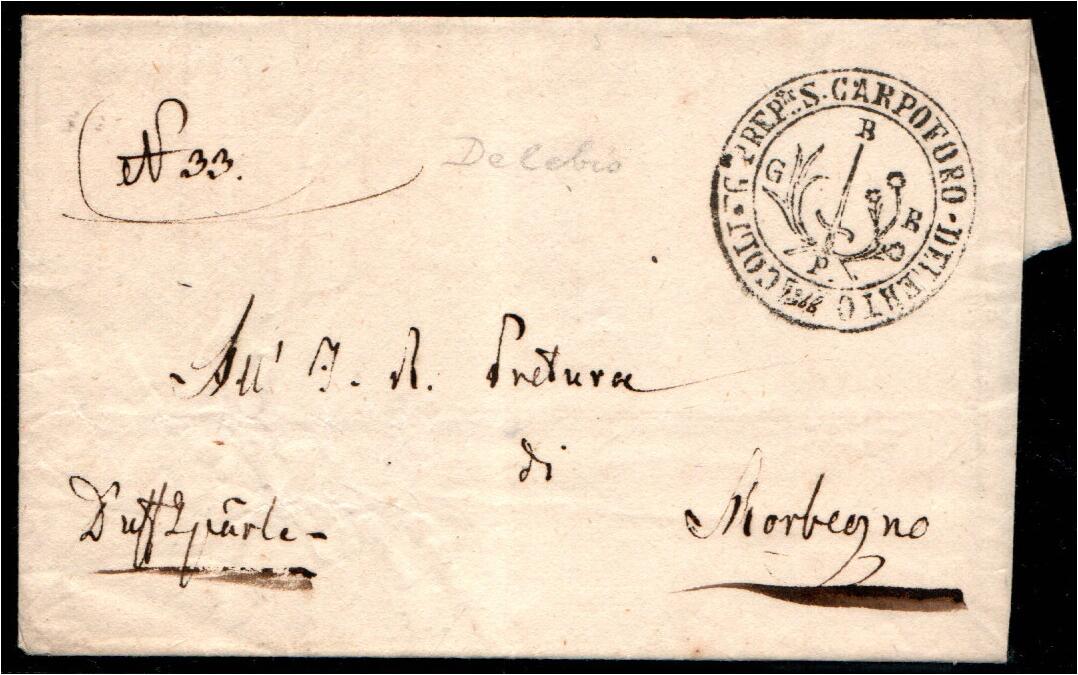
Italian states, Pre-philatelic folded letter, bearing a Collegio Preposto di San Carpoforo handstamp. Addressed to Morbegno.
Lot 434
Postal History - Flowers.
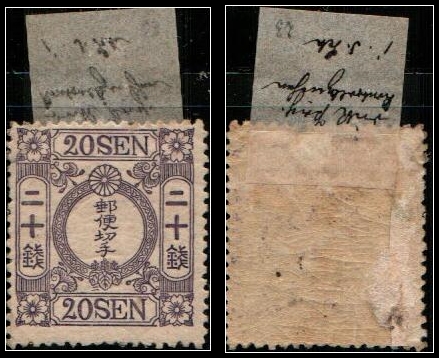
1874, Cherry Blossom, 20s violet, foreign woven paper. MiNr: 23x, 20s with trivial nibbed perforation at bottom, Very Fine strikes.
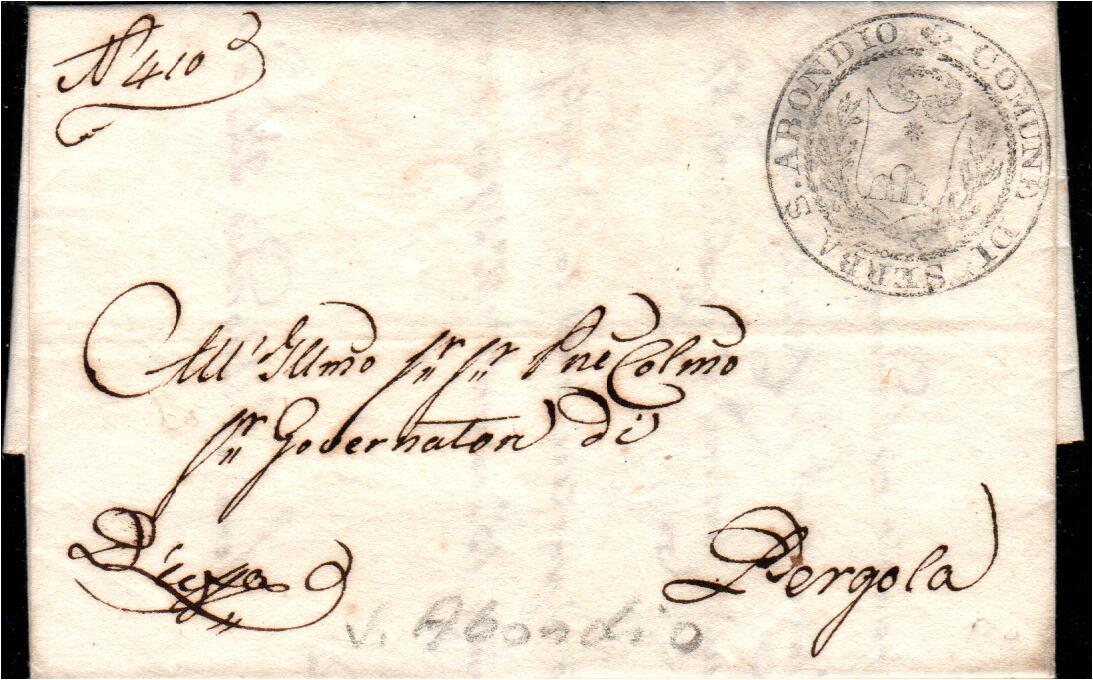
Italy, 1829 — Stampless folded letter from Serra San Abondio to Pergola.
Single circular municipal seal cancellation reading “ABONDIO MUNG OF SERBA” with emblem, serving as the sole postal mark.
Lot 436
Flowers.
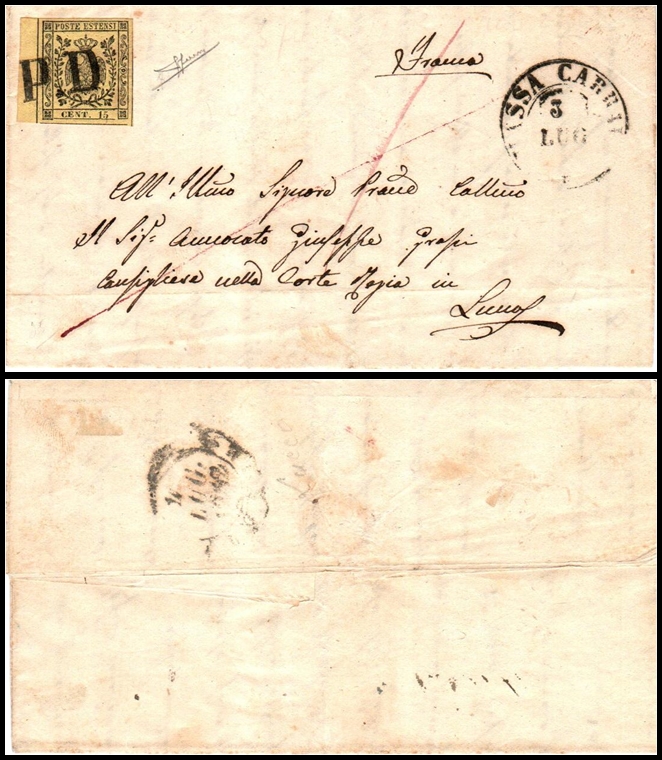
Italian States, Modena – Provisional Government, 1859 15c yellow-brown (Sassone #3. 400€++), well-centered with ample margins, neatly tied at upper left by boxed “P.D” to folded legal cover addressed to M. Sige. Avvocato Giuseppe Gropi, Suppliere nella Corte Regia in Luogo (Pleader in the Royal Court). Struck at right with partially clear “SSA CAR / 5 LUG” circular datestamp of the Sassuolo–Carpi postal route (5 July 1859), a scarce and desirable marking from the short-lived Provisional Government period following the fall of the Duchy. Expert’s signature SORANI at the right of the stamp. A fine and attractive cover combining a choice example of the issue with a significant postal route and period usage of legal correspondence during the year of Italian unification.
Lot 437
Flowers.
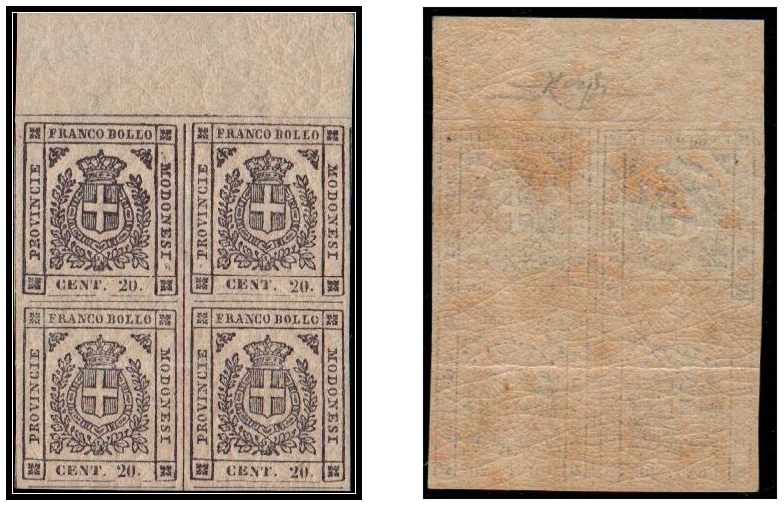
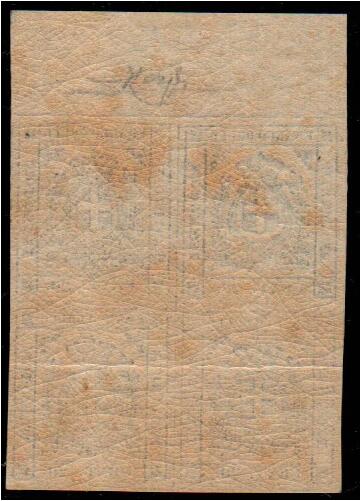
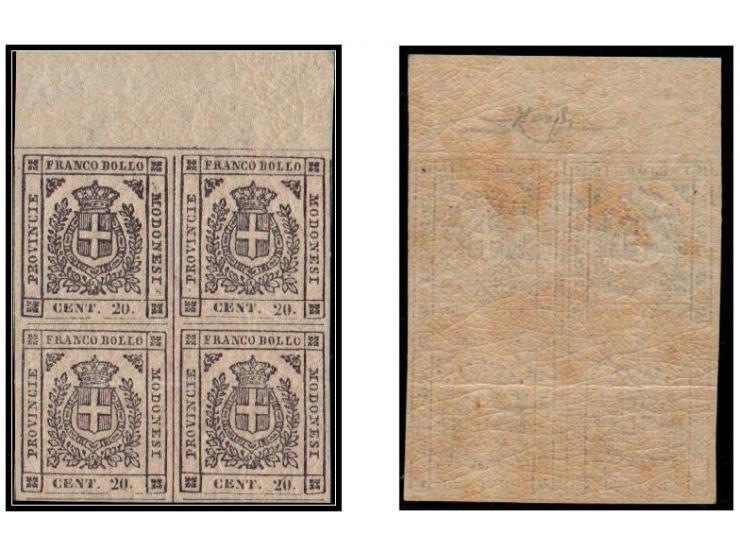
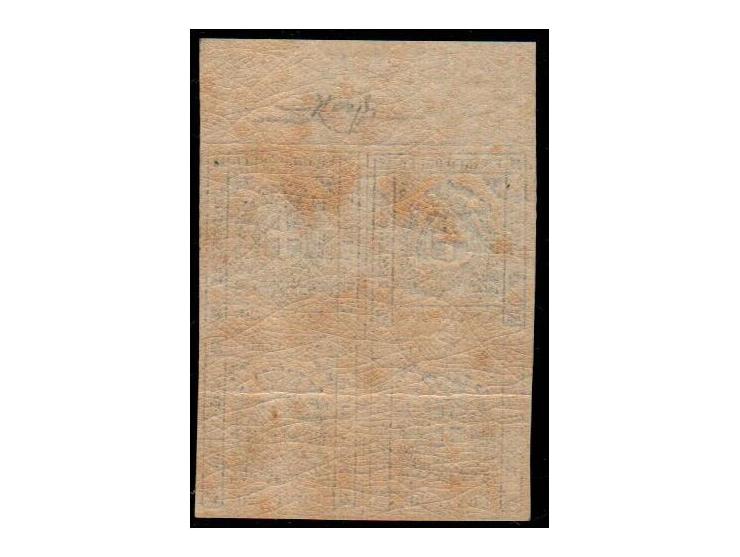
Modena, 1859 – Provisional Government, 20 c. violet block of four (Michel 9a, Sassone 15, €22,000)
Unused block of four 20 centesimi “Governo Provvisorio” stamps, showing the Modena coat of arms, inscriptions “FRANCO BOLLO” and “PROVINCIE MODONESI.” Fresh, with full to large margins and original gum. Fine and attractive multiple, signed Ennio Bianchi and accompanied by a certificate of authenticity. Previously sold at auction for CHF 800,. A rare and historically significant Italian States block, highly desirable to classic Italian philately collectors.
Lot 438
Flowers.
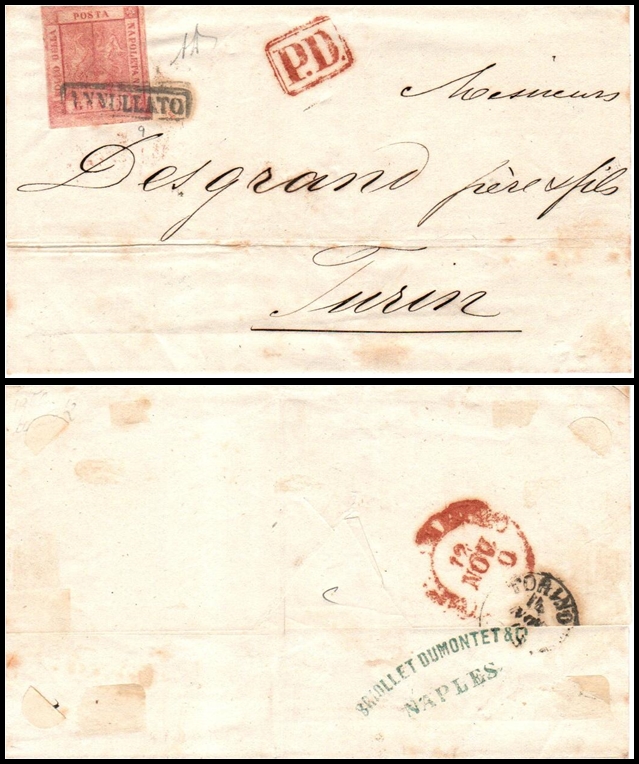
Italian States, Napoli, 1859 – Folded letter from Nepales to Turin, franked with 5 Grana carmine-pink, II Plate, canceled with rectangular “ANNULLATO” handstamp. Manuscript “PD” in red indicates prepaid. Reverse with “BRIOLLET DUMONTET & G NAPLES” sender handstamp and “Torin 19 NOV” circular postmark. Stamp expertized with signature beside the stamp, identified as Sassone No. 9. Scarce and attractive.
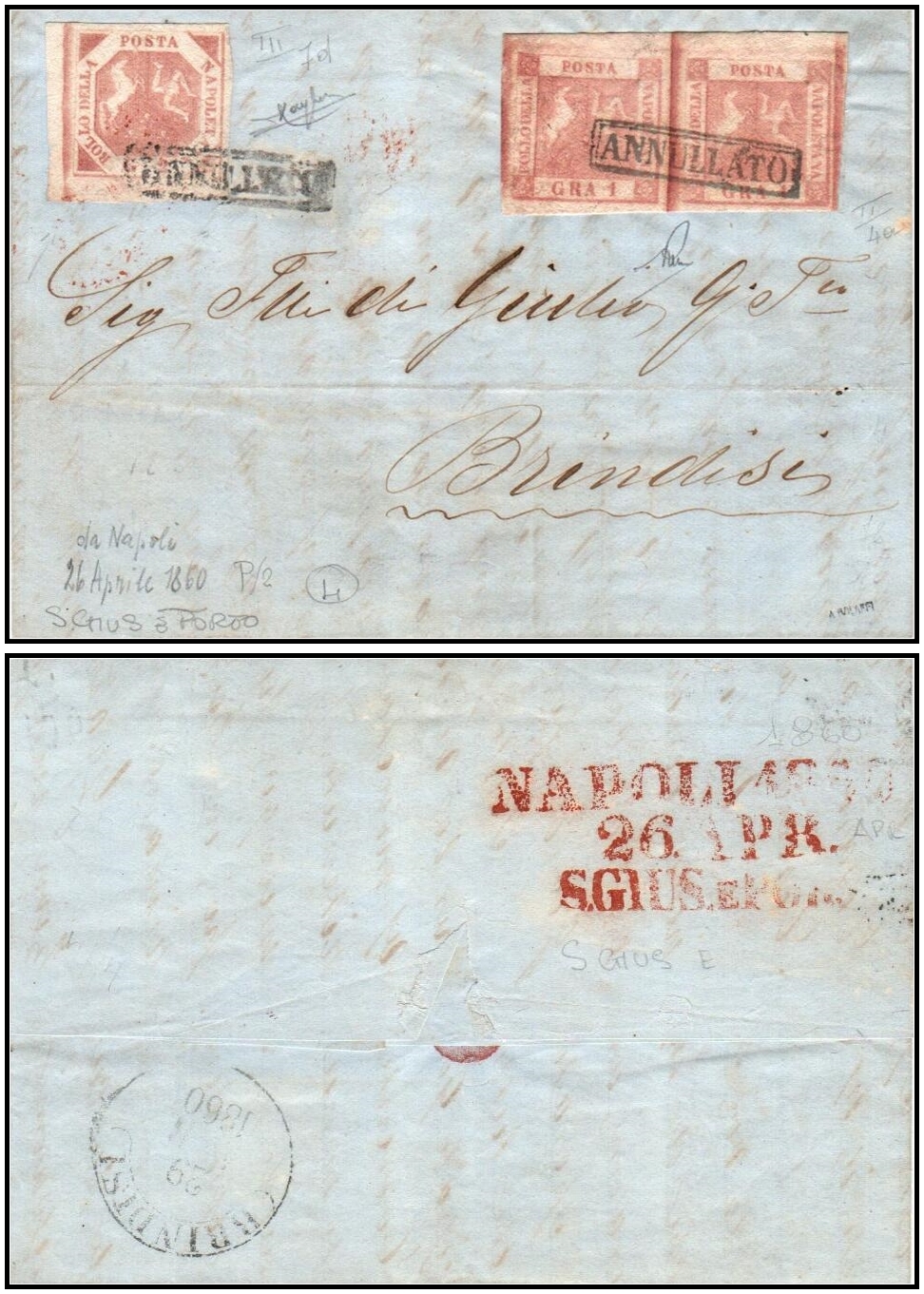
Italian States, Napoli 1860, Folded letter Napoli to Brindisi franked with 1gr. rose-pink horizontal imperf pair (Sassone # 4) and 2gr. pinkish brown, ( Sassone # 7) both struck with boxed ‘ANNULLATO’ (Cancelled) handstamps on front—typically applied to high-value or long-distance mail. The route from Naples to Brindisi was significant, and the combined stamp value corresponds to higher postal rates for such mail.
On reverse, a rare three-line red handstamp reads:
“Napoli 1860 / 26 Apr. / S. Gius. Poroo” (San Giuseppe Poro), alongside a black Brindisi circular date stamp (CDS) also dated 26 April 1860.
Stamps and cover bear an expert certificate signature nearby, with a certified handstamp at bottom right front.
Lot 440
Disinfection mail.
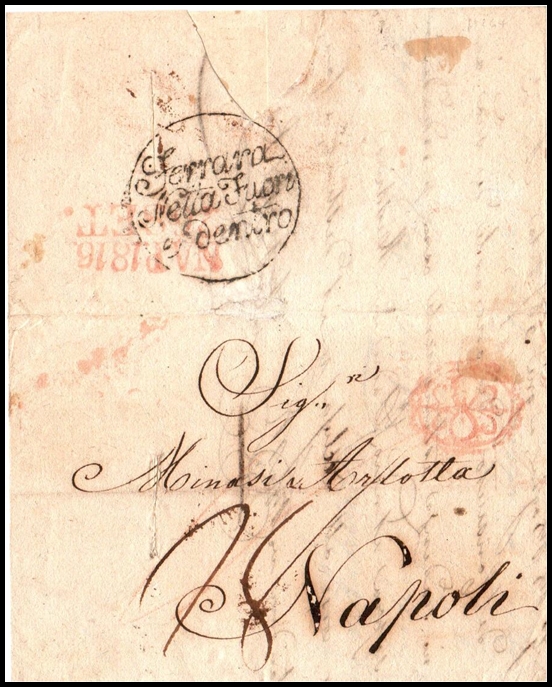
Italy, 1816 (26 Sept) — Disinfected Cover from Trieste to Napoli via Ferrara
Folded entirely bearing a pink flower-style health cachet on the front and disinfected inside/outside by the Ferrara sanitary authority, marked “Netta Fuori e Dentro”. Red arrival backstamp on reverse dated 26 Sept 1816. A fine example of early 19th-century quarantine mail, combining an intriguing floral cachet with rare Papal State disinfection handling.
Lot 441
Flowers.
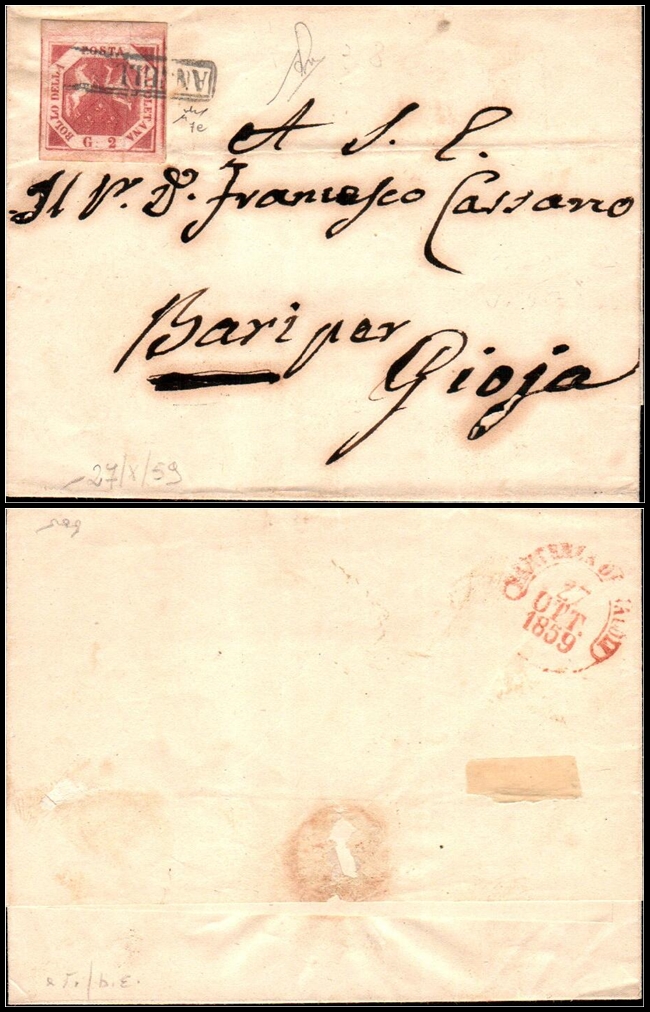
ITALIAN STATES – Naples 1859 Folded letter to Gioj franked with 2gr rosa brunastro (Sassone #7), tied by boxed “Annullato” handstamp, margins ample to large, especially wide top and bottom, just touched at left. Clean and attractive. Signed twice by Surány.
Lot 442
Flowers.
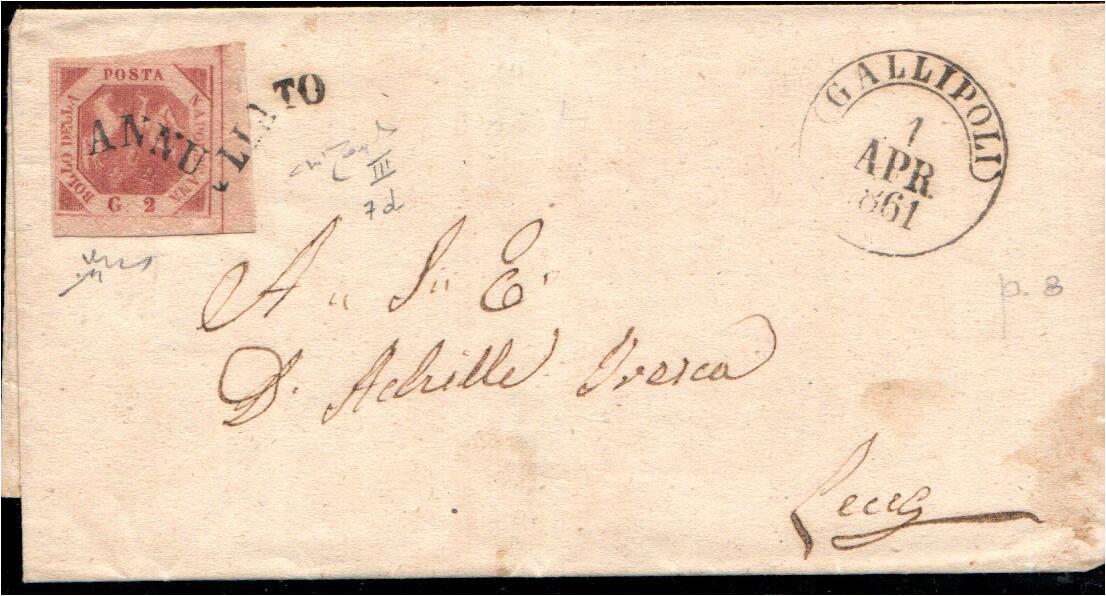
ITALIAN STATES – NAPLES, 1861: Cover franked with 2 grana red (Sassone 7d), cancelled by distinctive “Svolazzo” handstamp. Sent from Gallipoli on April 1, 1861. The stamp displays ample to extra-wide margins at right and bottom, with excellent color and impression on fresh cover. An attractive example of this scarce cancellation. Expertized by A. Diena, Chiavarello. Catalog value approximately €2,000+.Recent sales show strong demand for 2 gr red covers, valued €300–€1,000+ (2025).
Lot 443
Flowers.
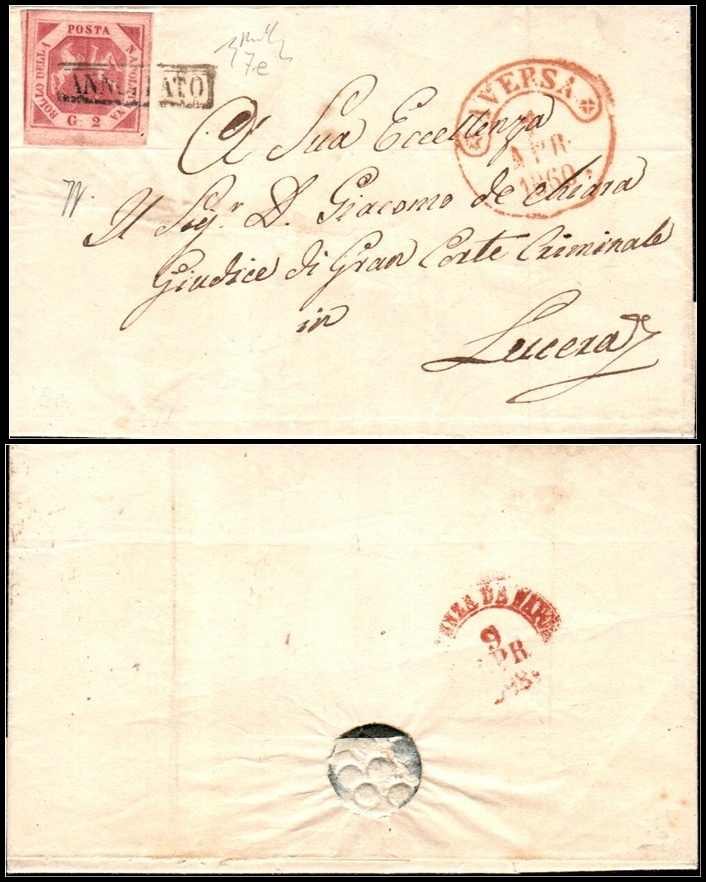
Italian States – Naples, 1859 (April). Envelope to Lucera, addressed to “Sua Eccellenza Il Sig. D. Giacomo de Chiari, Giudice di Gran Corte Criminale”, franked at right with 2 grana pinkish brown (Sassone 7e), which bears the Surány certificator’s signature along with the Sassone catalogue number. The stamp is cancelled by boxed “ANNULLATO” in black. At right, alongside the franking, fine strike in red of circular datestamp of Aversa with three-line date “APR 1859”; reverse with similar circular arrival datestamp of Lucera.
Lot 444
Flowers.
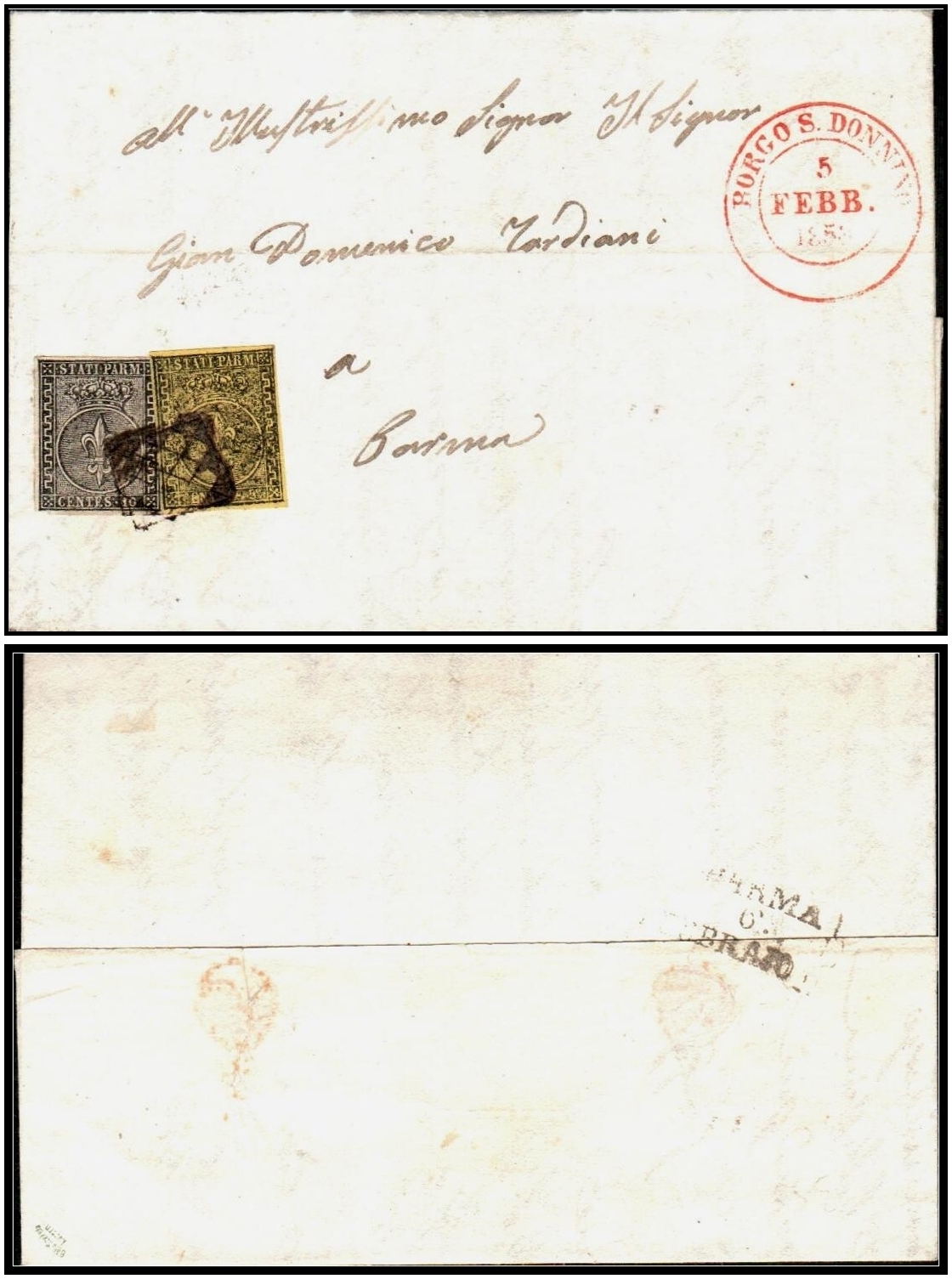
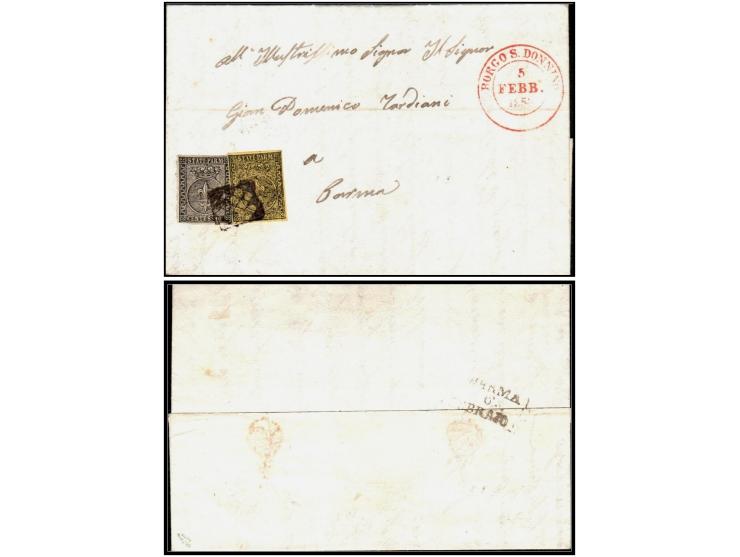
Italian States – Parma, 5 February 1853
Folded Letter from Duchy of Parma and correctly addressed to Borgo San Donnino (now Fidenza), franked with 5 c black on yellow (SG 1 / Mi Nr 1, Sassone #6) and 10 c grey‑black (SG 3 / Mi Nr 2, Sassone #5). Both stamps neatly tied by bold boxed network obliterator in black ink. Red BORGO S. DONNINO circular date‑stamp dated 5 FEB 1853 is struck adjacent, complemented by a legible Parma arrival cds on the reverse. A fine and scarce mixed‑franking usage from Parma’s first issue.